

Comparing oak frame quotations can be more complicated than simply looking at the final price.
Two suppliers may appear to be quoting for the same structure, yet the scope, timber specification, design service and level of preparation can vary considerably. A lower quotation may exclude important elements, while a higher figure may include design work, machining, fixings or delivery that another supplier charges for separately.
Before choosing an oak frame supplier, it is important to make sure you are comparing each quotation on a like-for-like basis.
Start with the scope of supply
The first thing to check is exactly what is included in the quotation.
An oak frame quotation might cover the structural frame only, or it could include additional elements such as:
- Oak rafters, trusses or floor beams
- Sole plates
- Glazing components
- Capping boards
- Cladding
- Roof timbers
- Structural calculations
- Delivery
- Installation
Do not assume that an item is included simply because it appears on a drawing or was discussed during an initial conversation.
Ask each supplier for a clear written breakdown of the materials and services included. This will make it easier to identify any items that may need to be sourced separately.
Check the oak specification
Not all oak supplied for structural framing is specified in the same way.
The quotation should explain the type, grade and origin of the oak being used. Important details may include:
- Whether the oak is green or seasoned
- The structural grade and/or visual grade, according to the TRADA grading system
- Timber finish (planed all round or rough sawn)
Green oak is commonly used for structural frames because it is easier to machine and naturally tightens around traditional joints as it dries. However, it will also move, shrink and develop surface splits as part of the natural drying process.
A reputable supplier should explain these characteristics clearly, rather than presenting oak as a completely uniform material.
Compare timber sizes
Check whether each supplier has quoted the same beam sizes.
A quotation may be cheaper because smaller sections have been allowed for, fewer members are included or decorative components have been simplified. This does not necessarily mean the design is unsuitable, but it does mean the quotations are not directly comparable.
Review the drawings alongside the quotation and compare:
- Post sizes
- Beam depths
- Rafter sizes
- Truss sections
- Braces
- Tie beams
- Decorative features (such as figured king posts, curved tie beams and braces, and end types)
Larger sections can affect both the structural performance and the visual presence of the finished frame.
Where timber sizes differ, ask the supplier to explain why.
Review the design service
Some oak frame quotations include a detailed design, while others are based on preliminary sketches or customer-supplied drawings.
Find out what level of design is included and what you will receive before the frame is manufactured.
This may include:
- Initial concept drawings
- 3D models
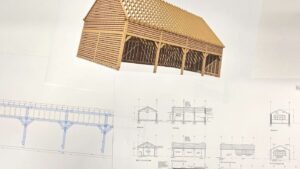
- General arrangement drawings
- Joint details
- Foundation or sole plate information
- Digital sign-off drawings
- Revisions
- Coordination with your architect or engineer
Ask how many drawing revisions are included and whether further changes will result in additional charges.
A detailed design process can help identify potential issues before the frame reaches site, reducing the likelihood of delays or unexpected alterations during installation.
Understand how the frame will be manufactured
The manufacturing method can affect the accuracy, consistency and ease of assembly of the frame.
Ask whether the frame will be cut by hand, machined using CNC equipment or produced using a combination of both methods.
CNC machining allows joints and components to be produced from an approved digital model, helping to achieve consistent dimensions throughout the frame. However, the quality of the initial design and checking process remains just as important as the machinery itself.
You should also confirm whether:
- Components will be labelled
- Peg holes will be pre-drilled
- Jointing details will be supplied
- Installation drawings will be included
These details can make a significant difference when the frame is erected on site.
Check whether structural engineering is included
Structural engineering is often handled differently by different suppliers.
One oak frame quotation may include structural calculations, while another may require you to appoint an independent engineer. Some suppliers may provide engineering only when it is required for Building Regulations or requested by the customer.
Confirm:
- Whether structural calculations are included
- Who is responsible for appointing the engineer
- Whether the engineer has experience with oak framing
- Whether changes requested by the engineer are included in the price
- Whether the frame design will be coordinated with the wider building structure
It is also important to establish whether the quoted timber sizes are preliminary or have already been structurally assessed.
Compare the jointing system
Traditional oak frames are usually assembled using mortise and tenon joints secured with oak pegs. However, the design and complexity of the joints may vary between suppliers.
Ask to see typical joint details and find out whether the frame will require significant cutting, drilling or adjustment on site.
A well-prepared kit should arrive with the majority of the specialist work already completed. This can allow the frame to be erected by an experienced main contractor or carpenter without extensive on-site machining.
Some suppliers may also use steelwork or concealed fixings in certain locations. These should be clearly identified within the quotation and drawings.
Consider glazing and weatherproofing
If the oak frame includes glazing, an orangery, a garden room or a glazed gable, check exactly how the glass will be incorporated into the frame.
The quotation should explain:
- Whether glazing is included
- The proposed glass specification
- Who is responsible for measuring and ordering the glass
- How movement within the oak will be accommodated
- What capping or weatherproofing system will be used
- Whether installation materials are included
Oak naturally moves as it dries, so glazing systems must be designed to accommodate that movement while maintaining weather resistance.
A lower quotation for the oak structure alone may not include the specialist components needed to complete the glazed areas.
Look closely at delivery costs
Delivery can be a significant cost, particularly for large frames or difficult-to-access sites.
Check whether delivery is included and confirm:
- The delivery address used for the quotation
- The type of vehicle required
- Whether unloading is included
- Whether mechanical lifting equipment is needed
- How the frame will be packaged
- Whether stillages or pallets must be returned
- Whether storage charges apply
You should also ask what happens if the site is not ready on the agreed delivery date.
Establish what installation support is available
Even where the frame is supplied as a kit, different levels of support may be available.
Some suppliers offer a full installation service, while others provide installation drawings, telephone assistance or access to recommended installers.
Ask whether the oak frame quotation includes:
- Full frame installation
- An installation guide
- Numbered components
- Telephone support
- Recommended or approved installers
- A site visit before delivery
It is helpful to understand where the supplier’s responsibility ends and where your builder’s responsibility begins.
Check lead times carefully
Lead times should be compared from the same stage of the process.
One supplier may quote from the date of order, while another may quote from final drawing approval or receipt of a deposit.
Ask each supplier to confirm:
- When the lead time begins
- How long the design process usually takes
- The estimated manufacturing period
- Whether the delivery date is fixed or indicative
- What may cause the programme to change
Do not base your project schedule solely on a headline manufacturing time without accounting for design approval and engineering.
Review payment terms
Payment schedules can vary significantly.
Some suppliers may request a large deposit, while others divide payments between the design, manufacturing and delivery stages.
Make sure you understand:
- The deposit required
- When further payments become due
- Whether design fees are refundable
- Whether changes affect the price
- Whether the final payment is required before delivery
- What happens if the project is delayed or cancelled
The total price is important, but the timing of the payments may also affect your overall project cash flow.
Ask about changes and additional costs
Oak frame projects often develop as the wider building design progresses.
Find out how each supplier handles changes after the quotation has been issued. Ask whether additional charges may apply for:
- Drawing revisions
- Changes after design approval
- Revised engineering requirements
- Site measurement visits
- Additional materials
- Storage
- Redelivery
- Replacement components
- Installation delays
An oak frame quotation with a clear scope and transparent change process is easier to manage than one containing a low initial price but limited detail.
Review the supplier’s experience
Price should not be considered in isolation.
Look at the supplier’s previous work and assess whether they regularly produce frames similar to your project. A company specialising in porches may not have the same experience as one manufacturing large glazed extensions, complex trusses or complete house frames.
Useful questions include:
- Can they provide relevant case studies?
- Have they completed frames of a similar size?
- Do they manufacture the frames themselves?
- Can you visit their workshop?
- Can they provide customer or contractor references?
- What quality checks take place before dispatch?
You should also establish who will be responsible for your project throughout the design and manufacturing process.
Compare warranties and aftercare
Ask what support is available after the frame has been delivered.
The quotation or terms should explain how the supplier handles:
- Missing components
- Manufacturing errors
- Damaged materials
- Replacement parts
- Natural timber movement
- Installation queries
- Product warranties
It is important to distinguish between a manufacturing defect and the normal characteristics of oak, such as surface checking, colour variation, shrinkage and movement.
A reliable supplier should explain both its responsibilities and the natural limitations of the material clearly.
Do not compare the headline price alone
The cheapest oak frame quotation is not always the lowest-cost option once all excluded items have been added.
For example, one quotation may include a fully designed and CNC-machined oak frame, detailed drawings, oak pegs, delivery and installation support. Another may include only a basic allowance for the timber components.
Before making a decision, create a simple comparison table listing the main items included by each supplier.
This can help reveal differences that are not immediately obvious from the final quotation totals.
Questions to ask before choosing an oak frame supplier
Before placing an order, ask each supplier:
- Is the oak frame quotation based on the latest drawings?
- Exactly which materials and services are included?
- What oak grade and specification will be supplied?
- Are the beam sizes fixed or subject to engineering?
- What design drawings will I receive?
- How many revisions are included?
- Are structural calculations included?
- How will the frame be machined and checked?
- Will all joints and peg holes be prepared before delivery?
- Is delivery included?
- What unloading equipment will be required?
- What installation support is available?
- When does the quoted lead time begin?
- What could result in additional charges?
- What aftercare is provided following delivery?
Making an informed decision
A good oak frame quotation should be clear, detailed and easy to understand.
Rather than selecting a supplier based on price alone, consider the complete package: the timber specification, design process, manufacturing accuracy, included materials, delivery arrangements and support available throughout the project.
Taking the time to compare quotations carefully can help prevent unexpected costs and ensure the oak frame you order is suitable for your design, programme and chosen method of installation.
At Vestra Oak, every frame is designed around the individual project and supplied as a precision-machined oak frame kit. Our team can help you understand the scope of your quotation, identify the elements included and ensure the frame is properly coordinated before it reaches site.
To discuss your project or request a detailed oak frame quotation, contact the Vestra Oak team.